
How Does Resort Villa Investment Work in Jaipur?
22 August 2026
A resort villa investment allows a buyer to own an eligible room, suite or villa within a professionally managed hospitality development. Instead of personally maintaining the property or finding tenants, the buyer may allow an appointed resort operator to manage eligible operations according to the executed agreement. The owner may also receive personal-stay privileges, defined annual benefits and other lifestyle advantages.
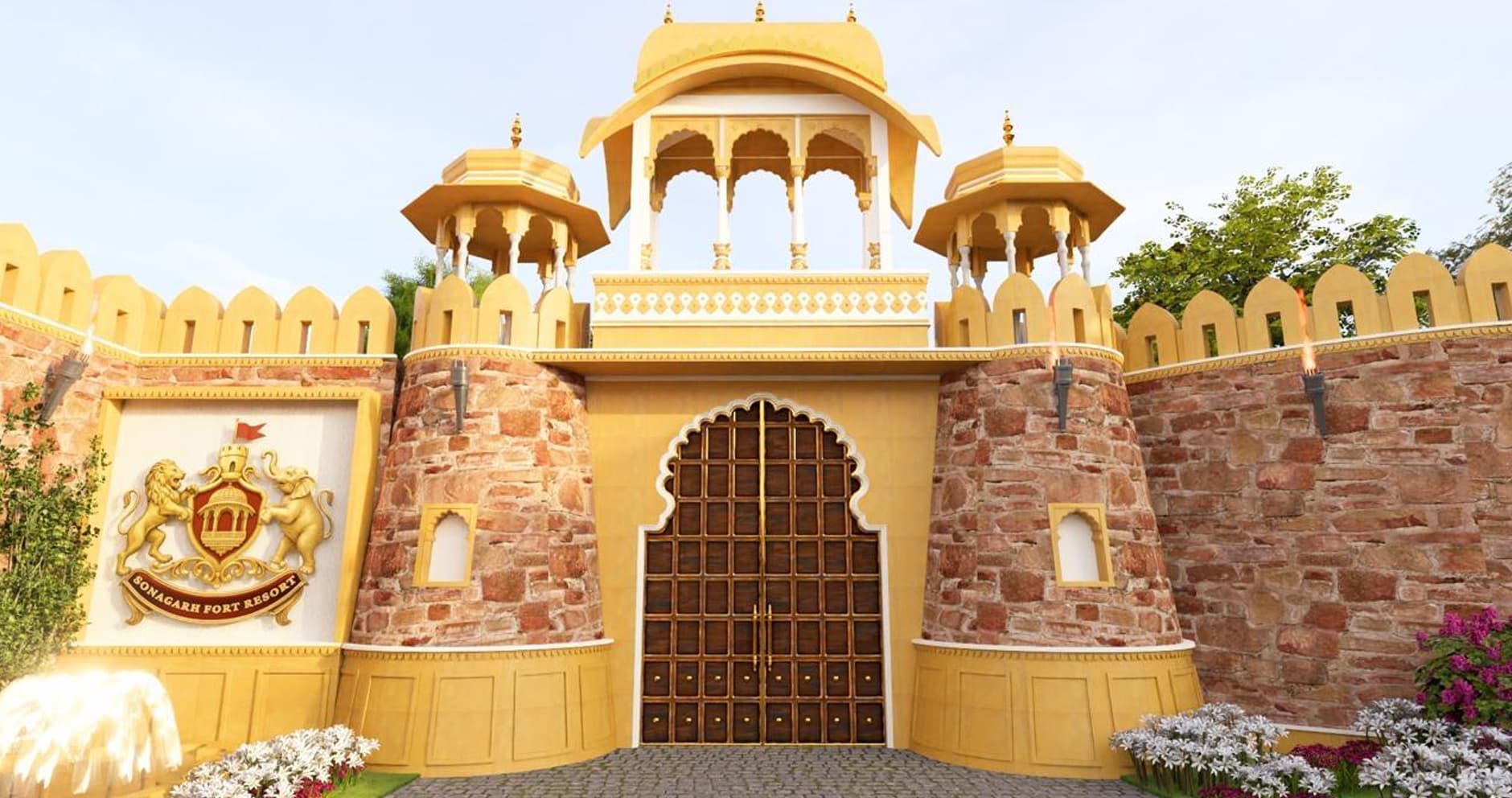
Sonagarh Fort Resort near Kukas, Jaipur, has been planned around this combined ownership and hospitality model. The proposed development includes palace rooms, premium suites and resort villas supported by professional management, destination-wedding infrastructure, wellness facilities, dining areas, gardens and recreational experiences.
For buyers, the important question is not only, “What return is being offered?” A responsible decision must also examine RERA registration, unit ownership, payment terms, resort management, personal-usage conditions, maintenance charges, construction status and resale provisions.
Quick Answer: How Does Resort Villa Investment Work?
A buyer selects an eligible unit within a resort development and completes the documented purchase process. A separate management or lease-back arrangement may allow the hospitality operator to manage the property for eligible resort use. The buyer may receive defined annual payments, revenue-sharing eligibility, complimentary stays and applicable owner privileges.
The complete model generally involves five stages:
- Verify the RERA-registered project.
- Compare the available ownership units.
- Review the sale and management agreements.
- Complete the authorised purchase and registration process.
- Receive eligible benefits according to the executed agreements.
Every right, payment and privilege should be supported by written documentation.
Why Are Buyers Exploring Resort Villa Ownership?
An ordinary second home can provide privacy and personal enjoyment, but it also requires regular supervision. The property may remain unoccupied for extended periods while the owner continues paying for security, housekeeping, repairs, utilities and maintenance.
A professionally managed resort property offers a different structure. Depending on the applicable agreement, eligible services may be coordinated by the resort-management team. The owner does not necessarily have to independently find short-stay guests, organise housekeeping or supervise common facilities.
This combination may appeal to buyers seeking:
- Property ownership near Jaipur
- Personal family holidays
- Professional maintenance
- Hospitality-linked income potential
- Resort facilities and services
- Wedding and lifestyle privileges
- A managed second-home alternative
However, resort ownership is not automatically suitable for every buyer. The model should be evaluated according to personal goals, contractual conditions, costs and risk tolerance.
Why Does RERA Registration Matter?
RERA registration provides an official project record through which buyers can verify available information about the registered promoter, development, location and proposed schedule.
Sonagarh is promoted as the First RERA Approved Resort in Jaipur. For formal project communication, “RERA-registered” is the technically accurate term. Buyers should independently verify the project information through the official authority and original certificates.
Important details to check include:
- Project RERA registration number
- Registered project name
- Registered promoter
- Official project location
- Registration validity
- Declared completion schedule
- Proposed unit inventory
- Available approvals
- Project updates
- Registered plans and disclosures
RERA registration creates an important transparency framework, but it does not eliminate the need to review the sale, management and financial-benefit agreements.
Are the Project and Agent RERA Numbers Different?
Yes. A project registration number and a registered real-estate agent number identify different registrations and should be displayed separately.
The Sonagarh brochure shows RAJ/A/2022/3380, which appears in an agent-registration format. Separate project promotions identify RAJ/P/2026/5257 as the project registration number.
Both should be verified against their original certificates before publication or purchase. The website and sales documents should clearly identify:
- Project RERA registration number
- Real-estate agent registration number
An agent registration should never be presented as the project registration.
What Ownership Options Are Proposed at Sonagarh?
Sonagarh’s supplied brochure describes five proposed ownership categories. These allow buyers to compare different areas, configurations and usage possibilities.
Deluxe Palace Room – Approximately 450 Sq. Ft.
The proposed Deluxe Palace Room provides a compact ownership format within the Sonagarh Palace building. The brochure describes 86 units in this category with a one-key allocation.
Palace Suite Room – Approximately 850 Sq. Ft.
The proposed Palace Suite Room offers a more spacious palace-accommodation format. The brochure describes 12 units with a 1.4-key allocation.
Super Deluxe Villa – Approximately 700 Sq. Ft.
The proposed Super Deluxe Villa provides a compact villa-style environment within the resort development. The brochure describes 60 units with a 1.7-key allocation.
Grand Suite Villa – Approximately 1,000 Sq. Ft.
The proposed Grand Suite Villa provides additional internal space for personal stays and eligible resort operations. The brochure describes 33 units with a two-key allocation.
Residential Mansion Suite – Approximately 1,300 Sq. Ft.
The proposed Residential Mansion Suite offers a larger 2 BHK format. The brochure describes nine units with a 2.2-key allocation.
Buyers comparing Luxury Resort Villas for Sale in Jaipur should verify whether the stated measurement represents carpet area, built-up area or another registered area. Unit number, floor plan, furnishings, parking, access and common-area rights should also be checked.
What Does the Buyer Actually Own?
This is one of the most important questions in a resort-property transaction. A buyer should understand whether the selected property is legally recorded as a room, suite, villa, serviced unit or another category.
The ownership documents should clearly establish:
- Unit category
- Unit number
- Registered area
- Floor and location
- Ownership rights
- Common-area rights
- Parking entitlement, if any
- Furnishing status
- Personal-usage rights
- Transfer and resale rights
Marketing names such as “Grand Suite Villa” or “Residential Mansion Suite” describe the product, but the registered documents establish what the buyer legally owns.
What Is a Resort-Management or Lease-Back Arrangement?
A resort-management agreement explains how the buyer’s unit may be operated and maintained as part of the broader hospitality property.
Depending on the documented model, the owner may authorise the management company to handle eligible services such as:
- Guest reservations
- Front-office operations
- Housekeeping
- Routine maintenance
- Security coordination
- Food and beverage
- Wedding and event services
- Common facilities
- Owner-stay bookings
- Property-quality supervision
Sonagarh Fort Resort is proposed to be managed and serviced by Lohagarh Group, subject to the final agreement. Buyers should verify the exact responsibilities of the registered promoter, developer, sales agent and hospitality operator.
What Should the Management Agreement Explain?
The management agreement should answer practical questions, including:
- Who maintains the unit?
- Which services are included?
- Which services are chargeable?
- Who pays for repairs?
- Who replaces furniture and equipment?
- Who pays utility costs?
- Can the owner independently rent the unit?
- Can the owner withdraw it from operations?
- How are owner stays reserved?
- How long does the agreement remain active?
- What happens when the property is sold?
Professional management can reduce day-to-day responsibility, but its value depends on clear obligations and reliable execution.
How Does the 7% Annual Return Work?
The supplied Sonagarh material refers to a stated 7% annual return for eligible buyers. The headline percentage alone is not sufficient to evaluate the benefit.
The buyer should obtain written answers to the following:
- On what amount is 7% calculated?
- Are registration charges and taxes included?
- When does the return begin?
- Is it payable during construction?
- Is it connected to resort operations?
- How frequently is it paid?
- How many years does it continue?
- Which company is responsible for payment?
- Does TDS or another deduction apply?
- What happens if payment is delayed?
Anyone considering a Resort Villa Investment in Jaipur should evaluate the complete payment clause, not only the advertised percentage.
Does an Assured Return Mean the Investment Is Risk-Free?
No property transaction should be treated as entirely risk-free. An assured-return clause creates a contractual obligation subject to its wording, duration, responsible entity and enforceability.
Buyers should verify:
- Legal entity promising the return
- Calculation method
- Payment schedule
- Duration
- Delay provisions
- Termination conditions
- Dispute-resolution mechanism
- Any security supporting the obligation
RERA registration and an assured-return agreement address different aspects of the transaction. One relates to project registration; the other governs a financial obligation.
Is Profit Sharing Separate from the Annual Return?
Sonagarh’s brochure also refers to expected annual revenue or profit sharing. Buyers should determine whether it is separate from the stated return or included within the overall financial structure.
A written explanation should clarify:
- Eligible resort revenue
- Treatment of room income
- Food and beverage revenue
- Spa and wellness revenue
- Wedding and event revenue
- Operating expenses
- Management deductions
- Profit-calculation method
- Owner’s applicable share
- Payment frequency
- Financial reporting
Expected profit sharing depends on actual performance and should not be presented as guaranteed income.
What Resort Activities May Generate Revenue?
A resort development may generate revenue from more than room stays. Sonagarh’s proposed hospitality model includes multiple operating areas:
- Leisure accommodation
- Family holidays
- Destination weddings
- Banquet functions
- Social events
- Group stays
- Restaurants
- Wellness
- Recreational experiences
- Corporate events
A broader operating model may create more commercial opportunities than an isolated rental villa. Nevertheless, future occupancy, room rates, event demand and operating profit remain subject to actual market conditions.
Can Owners Personally Stay at Sonagarh?
The supplied brochure describes up to 24 transferable complimentary nights annually for eligible owners. This benefit can provide personal utility in addition to the property’s investment potential.
Eligible stays may support:
- Family holidays
- Weekend breaks
- Anniversary stays
- Jaipur visits
- Hosting permitted relatives
- Wellness breaks
The owner should verify:
- Advance-booking requirements
- Availability
- Peak-season restrictions
- Blackout dates
- Transfer rules
- Applicable taxes
- Food and beverage charges
- Utility charges
- Extra-person costs
- Eligible room category
The personal-stay benefit is valuable only when its practical conditions match the owner’s intended usage.
How Does the Lifetime Wedding Privilege Work?
Sonagarh’s brochure describes category-based room benefits for one qualifying wedding event of two days and two nights.
The proposed room entitlement varies according to the ownership category. This may be meaningful for families because the development is planned with palace accommodation, villas, event gardens, banquet facilities and significant parking.
However, the room entitlement does not mean that the complete wedding is complimentary. The brochure indicates that owners may still need to pay for:
- Catering
- Beverages
- Decoration
- Entertainment
- Event production
- Gala dinners
- Room services
- Utilities
- Taxes
- Other resort services
Advance booking, availability, blackout dates and peak-season restrictions may also apply.
What Infrastructure Is Proposed at Sonagarh?
According to the supplied brochure, Sonagarh is proposed across approximately 18 acres with 200 ownership units representing approximately 290.6 room keys. These figures should be verified against the registered project record.
Proposed infrastructure includes:
- Sonagarh Palace
- Resort villas
- Residential mansion suites
- A 12,000+ sq. ft. banquet hall
- A 40,500 sq. ft. palace garden
- A 10,500 sq. ft. marriage garden
- A 10,500 sq. ft. gazebo garden
- A 2,500 sq. ft. mini banquet
- Swimming and leisure facilities
- Spa and wellness areas
- Restaurants and dining
- Sports and recreational activities
- Proposed parking for approximately 500–600 vehicles
Every visual and facility should be labelled as completed, under construction, proposed or subject to approval.
What Costs Should Buyers Calculate?
The advertised annual percentage does not represent the buyer’s complete financial outcome. Buyers should ask for a detailed cost sheet covering:
- Unit purchase price
- Registration charges
- Taxes
- Maintenance fees
- Utility charges
- Furnishing costs
- Replacement expenses
- Insurance
- Management deductions
- Transfer charges
- Financing expenses
- Tax liability on income
The effective value of an investment can only be evaluated after considering both benefits and costs.
Can the Unit Be Sold or Transferred?
The ownership and management agreements should explain:
- Lock-in period
- Transfer rights
- Resale procedure
- Transfer charges
- Right of first refusal, if applicable
- Management-agreement continuation
- Treatment of unpaid dues
- Nomination
- Inheritance
- Treatment of unused benefits
RERA registration, professional management and annual benefits do not guarantee immediate liquidity or future appreciation.
Who May Consider This Investment Model?
This ownership model may be considered by:
- Buyers seeking a managed second home
- Jaipur residents wanting periodic resort holidays
- Delhi-region buyers seeking a Jaipur property
- NRIs requiring local management
- Families interested in wedding privileges
- Buyers exploring hospitality-linked real estate
- People who do not want to manage tenants directly
It may not be suitable for buyers seeking unrestricted permanent residence, immediate resale, complete operational control or financial returns without risk.
What Should a Buyer Verify Before Investing?
A buyer should complete the following checks:
- Verify the project through the official RERA record.
- Confirm the registered promoter and project location.
- Visit the project and inspect construction progress.
- Compare registered unit plans and areas.
- Review the agreement for sale.
- Review the management or lease-back agreement.
- Verify the stated annual-return clause.
- Understand expected profit sharing.
- Calculate maintenance, taxes and other costs.
- Review personal-stay and wedding-benefit schedules.
- Understand transfer and exit conditions.
- Obtain independent legal and financial guidance.
Wrap-Up
Resort villa investment combines property ownership with professional hospitality management, personal-use benefits and structured financial opportunities. Its suitability depends on the quality of the project, clarity of the agreements, cost structure, management responsibilities and alignment with the buyer’s objectives.
Sonagarh Fort Resort presents a distinctive model supported by RERA registration, five proposed ownership categories, hospitality management, annual-benefit provisions, complimentary stays, wedding privileges and extensive proposed infrastructure. Buyers should evaluate these features through registered information and executed agreements rather than promotional claims alone.
FAQs About Resort Villa Investment in Jaipur
A resort villa investment involves purchasing an eligible unit within a professionally managed hospitality development. Depending on the agreement, the management team may handle resort operations, maintenance and guest services. The owner may receive documented financial benefits, personal stays and applicable privileges while retaining the ownership rights defined in the registered documents.